Top places for Tattoo Removal in London

There isn’t a Londoner who doesn’t know somebody whose tattoo is regrettable to him. According to LDN Fashion, roughly 40 percent of British people feel remorse about their tattoos. No matter how you look at it, the question you face is the following: where do you turn to have your tattoo removed in London? There are dozens of places where you can remove your tattoo in London, and these clinics differ widely in terms of technology, training and prices.
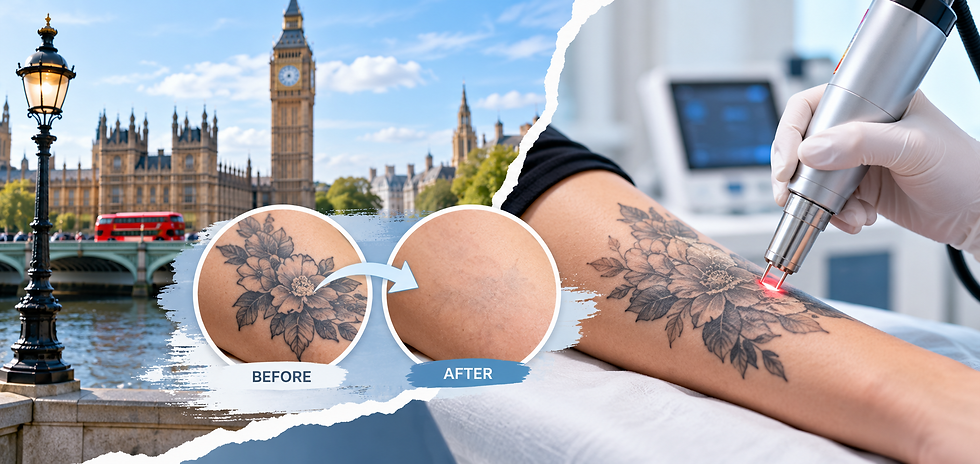
What to Check Before Choosing a Tattoo Removal Clinic in London
The Laser Treatment
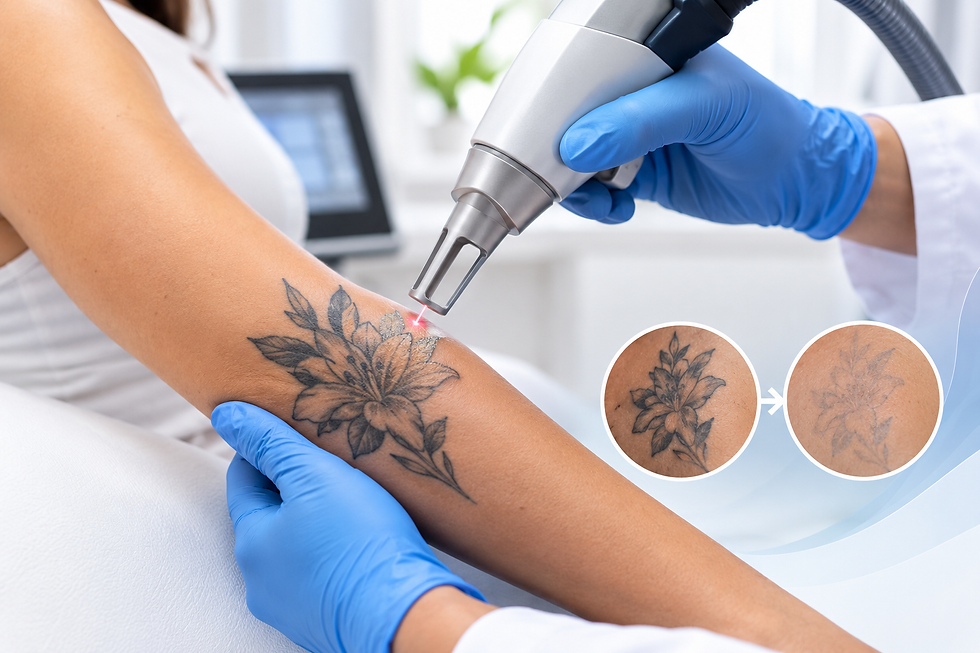
The laser is the preferred treatment in the UK. Pulsed light shatters the tattoo particles, which are then gradually removed by the immune cells in your body. Machines using nanoseconds require more treatment sessions than those using picoseconds; find out which equipment is being used on you.
Who Will Operate the Laser
Your skin type will be analyzed prior to treatment. Ask about the qualifications of the person administering your treatment and whether or not patch testing is available.
What Pricing Is Used
There are multiple pricing schemes; per session, package based on the size of your tattoo and fixed rate. Find out what if there is a possibility of more treatment sessions required.
Tattoo Removal Clinics in London Worth Shortlisting
These are the clinics I could verify from their own websites or independent listings. Book a consultation at two or three before deciding.
Clinic | Area | What stands out |
Institute of Medical Physics | King's Cross | Doctor-led clinic using its own Phantom™ laser system |
NAAMA Studios | London | Uses the LightSense laser, which is marketed as more comfortable |
Your Laser Clinic | London | Uses a Q-switched laser, often favoured for multi-coloured ink |
The Tattoo Removal Experts | London | Uses a Candela PicoWay and says it doesn't price purely by tattoo length |
Barbanente Clinic | Harley Street | Reviewers on Fresha mention laser tattoo removal here |
Pulse Light Clinic | Central London | Runs four lasers, including PicoSure and PicoWay |
The Institute of Medical Physics located at 199 Kings Cross Road states that Phantom™ uses acoustic shock waves instead of heat. This means that it is suitable for all skin types, even those from Fitzpatrick types 5 to 6.
How Much Does Tattoo Removal Cost in London?
Cost is based on design size, color of the ink used, design depth and the laser utilized. Bigger tattoos may cost between £200 and £300 per sitting and even up to £600 and £2,500 for a full course.
For illustration, below are the size-related costs charged according to the Institute of Medical Physics at the time of writing.
Tattoo size | Example | Upfront price |
XS (1–5 cm²) | 2 cm × 2 cm | £750 |
S (6–50 cm²) | 10 cm × 4 cm | £1,150 |
M (51–100 cm²) | 15 cm × 5 cm | £1,650 |
L (101–200 cm²) | 20 cm × 8 cm | £2,050 |
Final Thoughts
The correct decision will depend on an accurate estimate, an expert in the field, and an appropriate laser for your skin and tattoo type. Do a little comparison shopping, and make sure that the Institute of Medical Physics or any other clinic you are considering gives you a proposal in writing.
Frequently Asked Questions
How many sessions will it take?
It varies based on size, colour and depth. Conventional lasers schedule sessions 6 to 8 weeks apart, so you may need a whole year to remove it. New devices might have shorter intervals, so be prepared for the real timeline.
Is laser tattoo removal painful?
A majority of people report a sensation similar to a snap or sting. Clinics recommend applying numbing cream before the procedure, and a session for small tattoos can take 15 to 30 minutes.
Can a tattoo be completely removed?
Usually yes, but sometimes no. Old, black and grey tattoos are easier to remove. Deep, layered or multi-coloured pieces can leave behind a faint shadow.
Will it scar?
With a qualified operator and proper aftercare it is highly unlikely. Scarring happens if you pick at the scab or with improper device setting, so follow the clinic's instructions carefully.
Is it safe to use on darker skin?
Yes, as long as the clinic uses appropriate settings and a proper machine. Ask about the method to modify treatment for high-melanin skin and require a patch test.


Comments