How to Prepare for Backflow Testing in Sydney: A Comprehensive Guide


Received a yellow Sydney Water notice and not quite sure what to do with yourself? You're not the only one. Every year, thousands of cafes across Newtown, strata units throughout Parramatta, and factories in Penrith receive the same notification, and the due date isn't up for negotiation. In this handy guide, we'll take you step-by-step through what you need to do to ensure that when the tester arrives, gets the job done and heads out the door, you'll remain within the regulations.
Let's walk through Sydney Water's requirements, what you need to test for in the days leading up, what's to be done on the testing day, and common pitfalls that will set back your test results or incur re-test fees.
At the end of this, you'll feel like you've been doing Sydney water backflow testing for years as you walk through preparing for your backflow test like a seasoned facilities manager.
Why Sydney Water Requires Annual Testing
Backflow is essentially water moving from your property back in the direction of the drinking mains. This occurs whenever there's a burst pipe, in cases of fires or a reduction of water pressure. If a backflow prevention device is not in place, contaminants such as grease, chemicals and bacteria can flow into your drinking water.
To Sydney Water, the message is clear: "All properties connected to our water supply must have an installed testable backflow prevention containment device for the property hazard rating, and properties with a high or medium hazard rating will require an annual test of your installed device." That means you'll be paying for your devices to be installed, maintained and tested each year.
To meet Australian/New Zealand standards AS/NZS 2845 for design & performance and AS/NZS 3500 for installation & maintenance, devices need to be tested annually by a licensed plumber with backflow accreditation.
Understanding Your Hazard Rating
Sydney Water classifies a site as low, medium or high. If you run a car wash, medical facility, irrigation system or anything with chemicals, then it's likely going to be rated as a medium- or high-risk site and needs annual testing. Low-risk sites will still require a backflow prevention device but one that doesn't need annual testing. Look at your last report to confirm your site's rating.
How To Prepare For Backflow Testing In Sydney: Step-By-Step
Getting ready doesn't have to be hard, and the process of getting set up before the work begins can save you time (and cash!). Test crews will typically add on costs when they are denied access to the valve or have to wait for the water to be shut off.
1. Locate Your Device And Check Access
You'll generally find your isolation point just after your water metre out at the street, often housed in a green enclosure or metre room or located close to the main tap. Have a stroll around the property beforehand and, if you have a strata building, check with your building manager for the valve location diagram.
2. Clear The Area And Ensure Safety
For the test all water inlets should be readily accessible and clear of anything which is in the way of the machine. It may be necessary to turn the water off at the mains valve whilst testing. Clear out boxes, stock, garden implements and cobwebs.
The tester requires at least a metre of space to connect to their gauges and hoses. If the valve is within a ditch, ensure that it is not filled with water and that the lid opens easily.
3. Gather Your Paperwork
Make sure your latest inspection report, Sydney Water service number, and property information are at hand. Your inspection report details device type, dimensions, and serial number and will simplify the submission process. Keep your service invoices for previous repairs if applicable.
4. Notify Tenants And Plan For Water Shutdown
Water shutoff for a minute and valve testing may run from 20-40 mins each, so notify tenants and kitchen and clinic managers in advance. Best booked early am or at times outside business hours so tenants aren't too bothered. Hospitals and Food Service companies schedule in-between times when traffic is slow.
5. Book A Licensed Tester Early
You can't wait until the last minute. Sydney Water has deadlines and testers are usually booked up, so find a Sydney Water-accredited plumber that can lodge by early the next working day. Some local ones are even offering a fixed $199+ GST and lodging to Sydney Water within 24 hours of testing. They work under licence number 275183C, have over 10 years experience and take bookings on their website, which locks in the date and helps avoid phone tag.
What Happens On Test Day
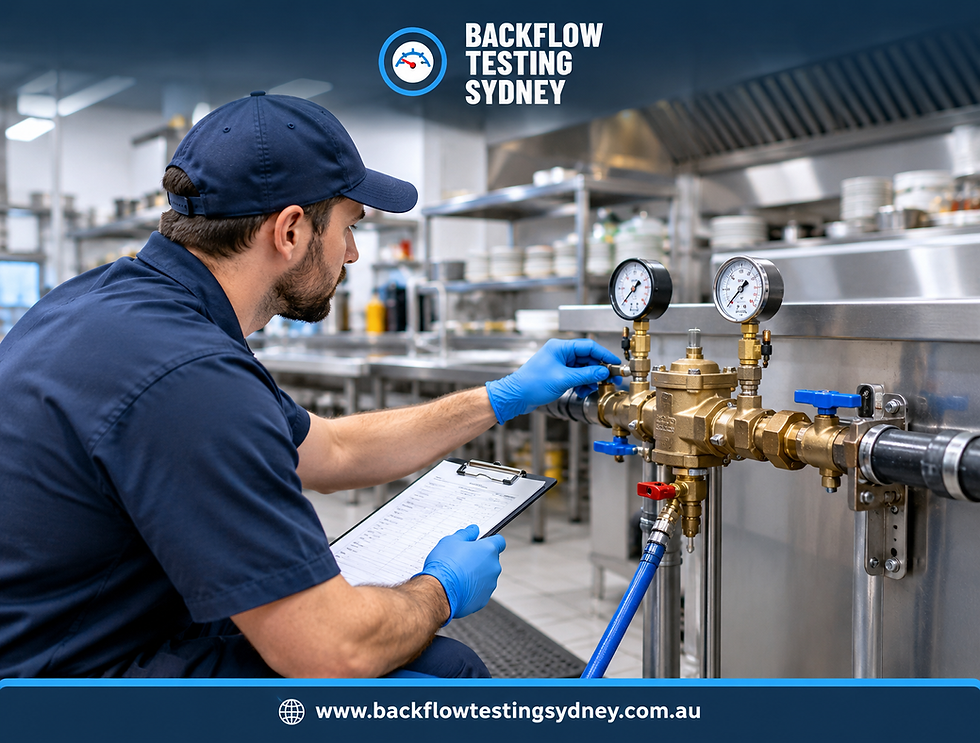
It all starts when the tester rolls in the field, calibrated and ready with a test rig. It will detach the equipment from the line, install tubes on the test cocks, and operate each check and relief valve under pressure.
The Testing Process Explained
First, an eye test and inspection for leaks and/or faults before back-to-back tests to ensure it functions correctly in both back-pressure and backsiphonage modes. If you pass, then Sydney Water requires a Backflow Prevention Device Inspection and Maintenance Report completed and handed in on the spot (which should also get to you on the same day).
Final Steps
The trick to getting backflow testing in Sydney right involves information, access, and timing. The key is to locate the valve, get the surrounding space clear of obstructions, give residents notice of a temporary interruption to your water supply, and arrange your appointment with a licensed plumber ahead of time. Make sure to have your most recent backflow test report on file, keep your site safe and dry, and pick a plumber who can lodge their report with Sydney Water within 24 hours of the test.


Comments