Why Is Emergency Plumbing Important for Sydney Residents?


Consider that it’s two in the morning, and there’s a lot of rain and water gathering under your kitchen cabinets. In Sydney, a burst pipe in a Surry Hills terrace or a blocked stack in a Parramatta apartment can quickly affect your neighbours. Waiting until the next day can be too costly. What makes swift action so important?
This guide covers what counts as an emergency, the unique challenges for Sydney residents, how to respond properly, and ways to prevent emergencies. Have you ever needed emergency plumbing services in Sydney? Look no further than this one article.
What Qualifies As A Plumbing Emergency In Sydney Homes?
Not all leaks necessitate emergency calls; there are some that carry serious threats to health and safety of life or even the property itself. Leaks that should be considered urgent are those such as burst pipes or pipes that are leaking too much, drains that are clogged with sewage flowing back, toilets that won't stop overflowing, loss of water pressure, lack of hot water, roof and stormwater leaks during East Coast lows, and gas leaks.
The Importance of Quickly Finding Emergency Plumbing in Sydney
Water doesn't stay in one spot. It moves behind the plaster, under the floor, and into electrical spaces. This can cause hidden damage without leaving any stains. The sooner the action is taken, the less will be the damage.
The True Cost Of Delaying Repairs
Sometimes, what starts as a minor fix becomes a costly process of restoration due to negligence. Moisture leads to deformity in wood, peeling of paint, damage in insulation and mould formation within 24 to 48 hours. In case of cafes and offices, the cost of being closed down for repairs usually exceeds the actual cost of plumbing.
Why Sydney Properties Face Unique Plumbing Pressures
Sydney has a mixture of terraces and coastal corrosion with a landscape of trees and dense high-rise buildings. In the western areas of Sydney, the houses have ageing copper or ceramic plumbing pipes that will corrode faster due to the salt in the air. After the rains, the tree roots will enter the sewer. The new housing estates have very high pressure in their main supply, which strains their fittings if not reduced to AS/NZS 3500 standards.
Common Emergency Triggers Across Greater Sydney
Storms during the summer season can produce 50 mm per hour, which can overload any stormwater drain that is clogged. Air from the coast makes the valves ineffective. For multi-storey structures, since there are shared stacks, once there is a clog, several people will be affected.
What to Expect From A Professional Emergency Call Out
High-quality plumbing services follow a well-defined process starting with telephonic triage that assists you in shutting down your water or gas supply; rapid despatch based on set pricing; prompt containment; and permanent repairs utilising WaterMark-approved components. This service provides you with an illustrated written report that will be useful for your insurers or strata in NSW.
Prevention Is Cheaper Than Restoration
Most emergencies are preceded by warning signs. The gurgling in the pipes, slow flushing, odour, or discolouration of the water should alert you that something needs to be done. Annual maintenance checks, drain cleaning, pressure testing, and hot water service will help the system last longer.
How Searching for Backflow Testing Near You Connects to Emergency Prevention
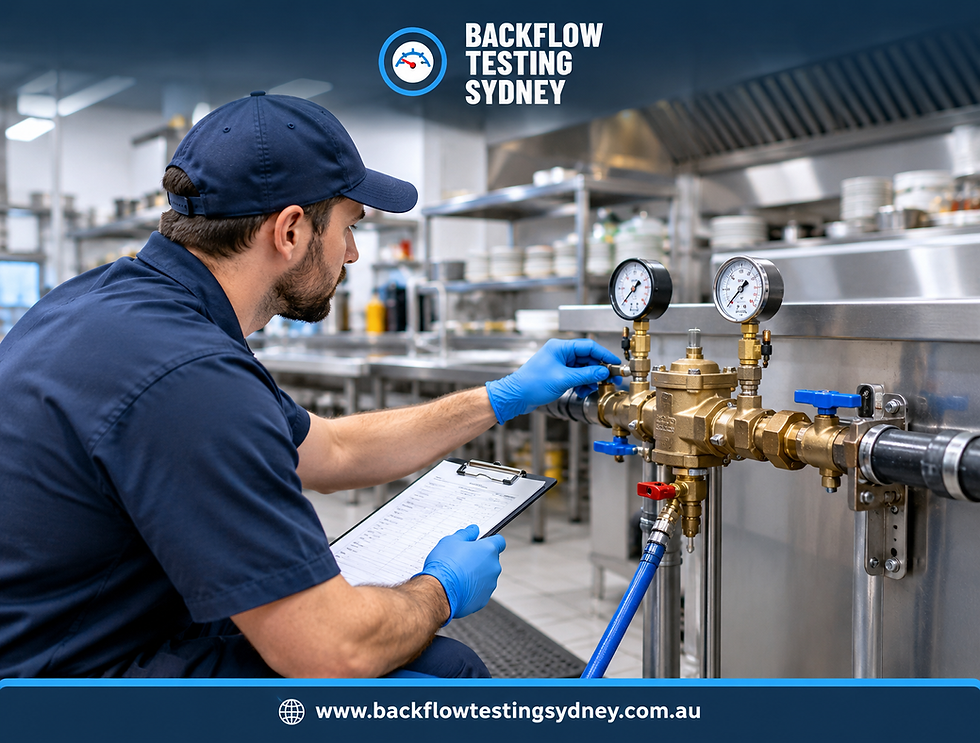
Emergency planning includes backflow prevention measures. If your property has a testable backflow device, Sydney Water requires annual testing. This follows AS/NZS 2845.3 and AS/NZS 3500.
In case of a failed device, contaminants will be able to flow into the water supply system, and thus it will be necessary to shut it off immediately. To find out more information, please check out our guide: 7 Essential Facts About Backflow Prevention Testing in Sydney.
In a Nutshell
Plumbing in an emergency setting is much more than simply protecting the pipe system itself. Emergency plumbing also provides health protection, maintains the value of your property, and helps business operations run uninterrupted. Immediate licensed assistance stops the flow of water and prevents potential risks like mould growth and electricity problems while maintaining your compliance with NSW legislation.
With fast action combined with preventive solutions like backflow testing accreditation, you get the best solution possible. When it comes to compliance, it may be wise to search for backflow testing near you.
Frequently Asked Questions
1. What should I do first in a plumbing emergency?
Turn off the water supply to the property, turn off the electricity if there is water around electrical outlets, ensure proper ventilation for any gas, and then contact an experienced plumber.
2. How much does an emergency plumber cost in Sydney?
A reliable service will give you a quote upfront for a $0 call-out fee. The amount you end up paying depends on the components and the difficulty of the job.
3. Are landlords responsible for emergency plumbing in NSW?
Yes. Urgent repairs under the NSW tenancy law include burst pipes, blocked toilets, and gas leakage. Tenants should report this to the agent immediately.
4. Can a blocked drain become a health risk?
Yes. Sewage contains harmful bacteria. Stay away from the water, prevent children and pets from getting near, and call a plumber with jetting equipment.
5. How often should I book maintenance in Sydney?
Usually, yearly inspections will be enough. However, for restaurants, hospitals, gyms, and strata units, half-yearly inspections along with yearly backflow testing are needed.


Comments