What Happens During a Restaurant Backflow Test in Sydney

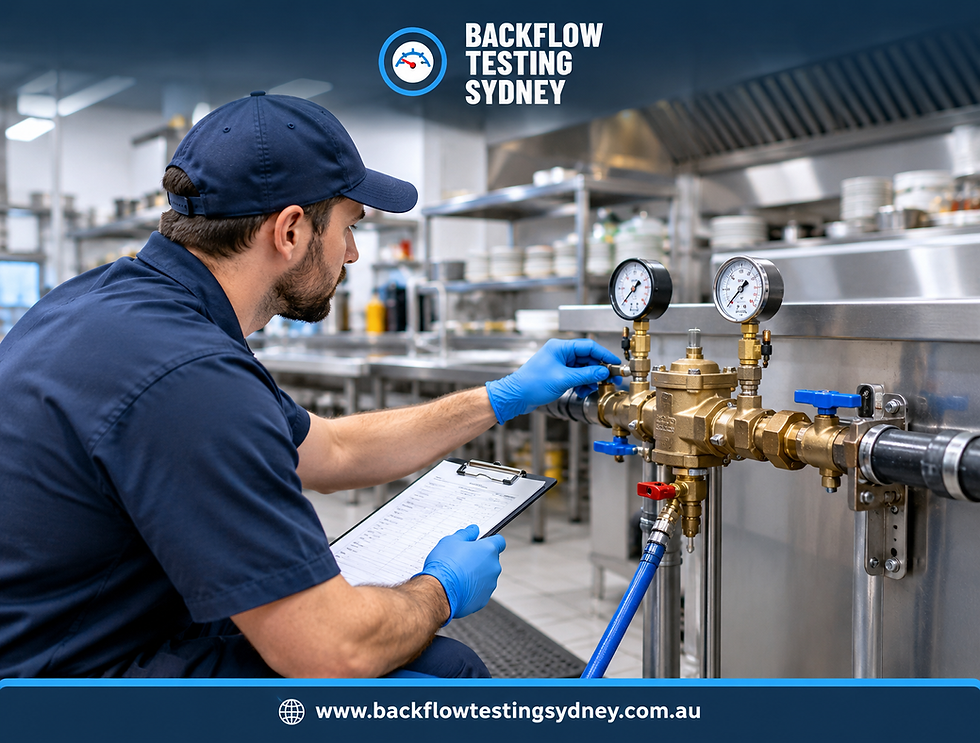
If you run a restaurant, cafe or takeaway in Sydney, a Sydney Water notice for backflow testing often arrives during a busy week. You want to know what the tester will do and how it affects service.
This guide explains backflow testing for restaurants in Sydney from arrival to lodgement, what gets checked, how long water is off and what you receive.
Why Restaurants In Sydney Need Backflow Testing
Most food premises are rated medium to high hazard. Dishwashers, chemical dispensers, coffee machines and hose taps can pull contaminated water back into the drinking supply if mains pressure drops.
Under the Sydney Water Customer Contract you must have a testable containment device at the boundary next to the water metre and test it every 12 months. The Plumbing Code of Australia and AS/NZS 3500.1 set the same interval. Sydney Water holds a register and tracks due dates. Miss it and you can get reminders and fees.
Before the Tester Arrives
What Your Restaurant Should Have Ready
The device is usually in a cage or on a wall near a metre, bin or gas metre. Clear boxes and cleaning gear so the tester can reach the isolation valves and four test cocks. You do not need to close the kitchen, but someone must give access.
Keep the last report handy. It shows if you have an RPZ, double-check valve or pressure vacuum breaker, plus size and serial.
How Long Water Is Off
A single valve test takes 30 to 60 minutes. Water is off only for pressure readings, usually 10 to 20 minutes. Most restaurants book before 8am or between services. Dry prep can continue.
Step By Step: What Happens During The Test
Visual Inspection and Access Check
Tester confirms device matches Sydney Water records and checks make, model and serial. It must be above ground with no branch connections between metre and device and with drainage for RPZ relief. They look for leaks, corrosion, damaged test cocks and constant dripping.
Isolating The Device And Connecting Test Equipment
The tester advises water will be off briefly, closes the downstream isolation valve and flushes each test cock to clear grit. They then connect a calibrated differential pressure gauge. Sydney Water only accepts calibrated equipment.
Pressure Testing Check Valves and Relief Valve
For a double check valve, they measure if each check holds at least 7 kPa and seals. Low readings mean worn rubbers or a weak spring.
For an RPZ, common on restaurant sites, they test check one, check two and relief between them. They lower zone pressure and record when relief opens. It must open before checking the two loose seals. This proves the device dumps to the atmosphere rather than letting water pass back. Readings are taken twice. Leaking isolation valves invalidate results.
Recording Results And Lodgement
If it passes, the tester completes the Sydney Water report on site. It lists address, device type, make, model, serial, pressure readings, pass or fail per component and licence details. Reports must be lodged within 24 to 48 hours. You get a copy and confirmation for strata or council.
What If The Device Fails?
Common Reasons For Failure In Restaurants
Grease, scale and fine particles foul rubbers; springs lose tension; debris enters after mains work; and corrosion affects cocks. Relief that runs constantly often means a stuck seal.
Next Steps To Stay Compliant
A failed device cannot be lodged as a pass. The tester explains which part failed and shows readings. Most fixes are seal kits, spring changes or cleanings. If the body is pitted or parts are obsolete, replacement is cheaper. After repair, the device is retested and a new report is lodged.
How To Keep Your Restaurant Compliant After The Test
Set the next due date 12 months from the test date and add a reminder a month early. Keep the device clear, do not box it in and do not paint over tags. If you add a combi oven, chemical dosing or an outdoor bar, tell the plumber, as the hazard rating can change.
Backflow testing for restaurants in Sydney follows the same pattern each year: inspect, isolate and flush, connect gauge, test each valve to standard, document and lodge. Water is off minutes and you have proof the same day.
For venues that want paperwork handled quickly, Backflow Testing Sydney offers flat-rate accredited testing and lodgement within 24 hours. It suits kitchens needing work outside service hours.
Read this article: What is Backflow Testing and Why is it Important for Restaurants
Key Takeaway
A backflow test protects customers and keeps you off the overdue list. Clear access and book ahead. That keeps backflow testing for restaurants in Sydney a routine visit rather than a scramble.
FAQs
How Often Does A Restaurant Need Backflow Testing In Sydney?
Every 12 months. Medium- and high-hazard devices must be tested annually by an accredited licensed plumber with a report lodged.
Do I Have To Close My Restaurant During The Test?
No. Water is off for about 10 to 20 minutes. Book before opening or between services.
Where Is The Backflow Device In A Restaurant?
At the boundary next to the water metre, usually in a cage on the external wall. Must be above ground, not in a pit, with drainage for RPZ.
What Does The Tester Check Besides Pressure?
Installation compliance, device type, leaks, corrosion, test cock condition, isolation valve tightness, relief operation and hazard rating.
Can Any Plumber Do The Test?
No. In NSW only a licensed plumber with a backflow prevention endorsement can do a test Sydney Water accepts.


Comments