How Does the Best Driveway Cleaning Company Restore Stained Concrete?

A concrete driveway is exposed to vehicle traffic, changing weather, dirt, oil leaks, and organic growth throughout the year. Over time, these conditions can leave the surface looking dark, uneven, and neglected. Ordinary rinsing may remove loose dirt, but stubborn stains often require a more targeted cleaning approach. Understanding how professional cleaning works helps homeowners make informed decisions about driveway maintenance.
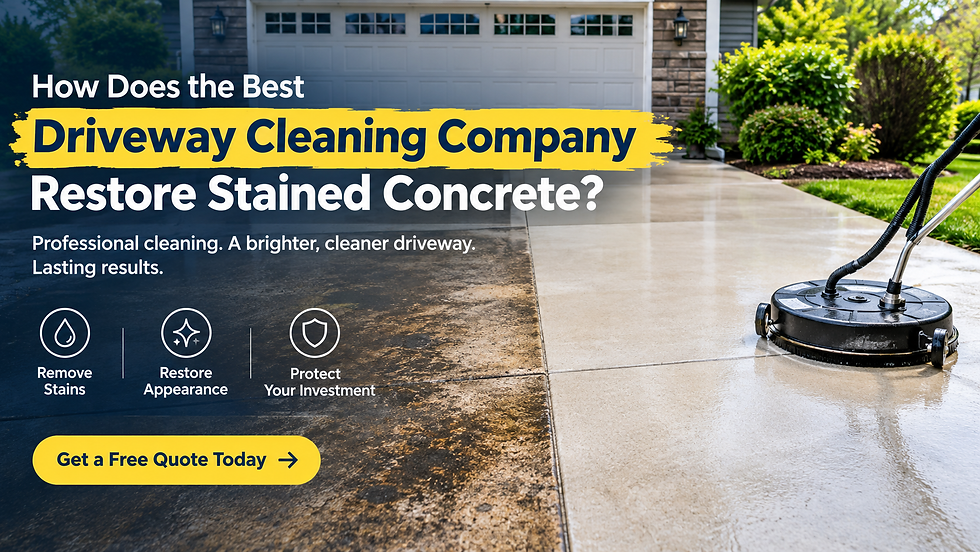
The best driveway cleaning company does more than wash away visible grime. It assesses the surface, identifies the type of staining, and selects suitable cleaning methods to improve the driveway's appearance without causing unnecessary damage.
Why Concrete Driveways Develop Stubborn Stains
Concrete may appear solid, but its surface contains small pores that can absorb liquids and hold dirt. When oil, grease, and other contaminants settle into these pores, marks can become difficult to remove with household cleaning products.
Common causes of driveway staining include:
Oil and grease: Leaks from parked vehicles can leave dark patches that penetrate the concrete.
Tire marks: Repeated vehicle movement can create black streaks and rubber deposits.
Algae and organic growth: Moisture and shaded conditions can encourage green or dark surface growth.
Weather and road grime: Rain, mud, airborne dirt, and seasonal debris gradually affect the driveway's appearance.
Rust and mineral deposits: Metal objects, irrigation water, and other sources can leave reddish-brown or discolored patches.
Identifying the source of a stain is important because different contaminants respond to different treatments. A general rinse may remove loose dirt, while oil stains usually need a suitable degreaser before washing.
How Professional Concrete Driveway Cleaning Works
Professional cleaning generally involves several steps. The exact approach depends on the driveway's material, age, condition, and the type of staining present.
1. Inspecting the Surface
The process begins with an assessment of the driveway. The cleaner checks for oil spots, algae, tire marks, surface wear, cracks, and other visible problems. Concrete, asphalt, stamped concrete, and pavers do not always respond to the same cleaning techniques.
This initial inspection helps determine the appropriate pressure, equipment, and cleaning products. It also identifies areas where aggressive washing could worsen existing damage.
2. Treating Oil and Grease Stains
Oil stains often require attention before pressure washing begins. A suitable commercial degreaser helps loosen or break down oily residue, making it easier to remove during the cleaning process.
The product must be compatible with the surface and used according to its instructions. Some older stains may remain partially visible because oil has penetrated deeply into the material. Setting realistic expectations is therefore an important part of professional cleaning.
3. Using Surface Cleaners and Controlled Pressure
A pressure washer can remove embedded dirt and surface buildup, but technique matters as much as water pressure. Excessive pressure or holding a nozzle too close can etch concrete, expose aggregate, or create uneven marks.
Rotary surface cleaners help cover broad areas more consistently than cleaning every section with a narrow spray alone. Decorative concrete and pavers may need a gentler approach to protect their finish and prevent joint sand from being displaced.
Professional concrete driveway cleaning combines appropriate equipment with controlled technique to achieve a more uniform finish.
4. Rinsing and Checking the Results
After cleaning, the surface is rinsed to remove loosened dirt and cleaning residue. A final inspection helps identify any remaining stains and areas that may need additional treatment.
Water runoff also deserves attention. Cleaning solutions and oily residue should be managed responsibly to reduce the risk of contaminating nearby soil, plants, or storm drains.
When Driveway Cleaning and Restoration Makes a Difference
A thorough cleaning can make a driveway look brighter and more consistent. Removing algae and accumulated grime may also improve traction in affected areas, particularly where organic growth creates slippery conditions.
However, cleaning and restoration are not the same as structural repair. Pressure washing cannot fill cracks, replace missing concrete, or reverse serious surface deterioration. Pitting, flaking, and deep discoloration may require additional repair work.
After cleaning, a suitable concrete sealer may provide another layer of protection against moisture and future staining. Sealing is optional, and the correct product depends on the concrete's condition and intended use. The surface must be prepared properly and allowed to dry as directed before the sealer is applied.
For homeowners considering driveway cleaning and restoration, the goal should be to improve the surface while understanding which problems cleaning can realistically address.
How to Maintain a Cleaner Driveway
Regular maintenance helps prevent everyday dirt from becoming a more difficult cleaning problem.
A few practical habits can make a difference:
Absorb fresh oil spills promptly with an appropriate absorbent material.
Remove leaves, mud, and other debris before they accumulate.
Address algae and slippery growth when it first appears.
Avoid harsh chemicals that may damage concrete, nearby landscaping, or existing sealers.
Inspect the driveway periodically for cracks, flaking, and drainage problems.
Consider professional cleaning when stains persist despite routine maintenance.
The ideal cleaning frequency depends on vehicle use, shade, drainage, local weather, and the driveway's overall condition. A fixed annual schedule is not necessary for every property.
What to Look for in a Driveway Cleaning Company
Choosing a service provider involves more than comparing prices. Look for a company that inspects the surface, explains its cleaning method, and distinguishes between removable stains and permanent damage.
Ask whether stubborn oil marks receive pretreatment, how decorative surfaces are handled, and what measures are taken to protect nearby landscaping. A clear estimate should explain the work included and whether optional sealing or additional stain treatments cost extra.
In Northeast Ohio, Forest City Power Washing provides driveway and concrete cleaning for surfaces including driveways, sidewalks, patios, pool decks, and garage floors. Its published process includes surface cleaners, targeted degreasers, pressure washing, rinsing, and optional concrete sealing. These details offer a practical example of what homeowners can look for when comparing cleaning services.
Conclusion
Restoring stained concrete starts with understanding why the marks developed and selecting the right treatment for the surface. Degreasers can help address oil stains, while controlled pressure washing removes accumulated dirt and organic buildup. Surface inspection, appropriate equipment, and careful rinsing all contribute to a more consistent result.
For lasting improvement, homeowners should also address maintenance needs and consider whether sealing or separate repairs are appropriate. A well-planned cleaning service can refresh the driveway's appearance without promising that every stain or surface defect will disappear.
Comments