Dark Skin and Laser Tattoo Removal in London: What You Need to Know

Maybe you have a dark skin tone, and you have been delaying the tattoo removal. In fact, you are not the only one. Many people with brown or Black skin have probably heard phrases like "Laser is not going to work on you" or "the risk is very high", and they have left without any answers. Actually, the truth is much more positive than these rumours, but it also comes with some important things worth knowing before you book anywhere.
Here is a simple and straightforward explanation of what you will get.
Why Skin Tone Matters in Tattoo Removal
Laser tattoo removal works by sending pulses of concentrated light energy into the skin. That energy targets the pigment in the ink, breaking it into smaller fragments that your body's immune system gradually flushes out. Simple enough until you factor in melanin.
Melanin is the pigment that gives skin its colour. In darker skin, there's more of it, and it sits closer to the surface. The problem? Some lasers can't distinguish between tattoo ink and skin pigment. When that happens, the surrounding skin absorbs energy it shouldn't, which is where complications begin.
This doesn't mean tattoo removal is off the table for people with darker skin. It means that both the technology and the practitioner's expertise matter enormously.
The Two Main Risks and How Good Clinics Manage Them
Hyperpigmentation is when the treated area becomes noticeably darker after a session. It happens when the skin reacts to the laser by producing excess melanin in response to the inflammation. It's usually temporary but can take months to settle.
Hypopigmentation is the opposite: a patch of skin losing colour altogether. This can appear as light spots in the treated area and, in some cases, doesn't fully reverse.
Both hyper and hypopigmentation can be prevented if the clinic implements the correct approach. The main issues are the selection of the wavelength, the laser power setting, the session frequency, and the patch test. Often, clinics that are not particularly friendly to patients with darker skin will skip the steps above.
What Laser Technology Is Actually Safe for Darker Skin
Not all lasers are built the same. The older Q-switched nanosecond lasers, while still widely used, generate more heat during treatment. Heat is precisely what causes pigmentation damage in melanin-rich skin.
Newer acoustic or picosecond-based systems work differently. Instead of relying heavily on heat to shatter ink particles, they use ultra-fast mechanical shockwaves to physically break the ink apart. Less heat means far less risk to the surrounding melanin. These systems also tend to use a 1064nm wavelength, which passes through the melanin layer without being absorbed, targeting the ink directly underneath.
For anyone with Fitzpatrick skin type IV to VI, which ranges from medium brown to very dark skin, this distinction genuinely matters. A clinic using outdated technology on deeper skin tones is not just less effective; it can cause lasting damage.
Black Ink vs Coloured Ink on Darker Skin
Here's something many clinics won't be upfront about: black and dark ink is significantly more straightforward to treat on darker skin tones than coloured ink.
Laser energy absorption by black ink occurs across a wide range of wavelengths, making it easy to target even when operating parameters must be kept conservative. On the other hand, coloured inks require different wavelengths, and those wavelengths overlap more strongly with melanin absorption. The risk of side effects for darker skin is significantly higher for multi-coloured tattoos.
That doesn't mean colour removal is impossible, but you should ask your clinic directly whether they have experience treating your specific ink colours on skin tones similar to yours. Any reputable clinic will give you an honest answer rather than a blanket "yes."
Spacing Sessions: Why You Can't Rush It
Six to eight weeks is the typical interval period between sessions for light skin types. For darker skin, this generally needs to be longer. The skin must be given sufficient time to heal, the inflammation must completely resolve, and any temporary pigmentation changes must be allowed to settle before the next session.
When you try to be at the session intervals just to get faster results, you will always backfire. The cumulative effects of too-frequent sessions on melanin-rich skin greatly increase the risk of hyperpigmentation. Here, impatience is not just a suggestion; it's part of the protocol.
What to Look for in a Clinic
If you're considering laser tattoo removal in London and you have a darker skin tone, these are the non-negotiables:
A patch test should be standard practice, not optional. Any clinic that wants to go straight to a full treatment on your first visit should give you pause.
The clinic should be the most familiar with the Fitzpatrick scale and be able to articulate a clear adjustment methodology for each patient's skin type. The assurance of "this will work" is not sufficient.
Find out what laser system is used and if it is supported by clinical evidence for safely being used on darker skin tones. Acoustic shockwave and picosecond technologies have the strongest track records here.
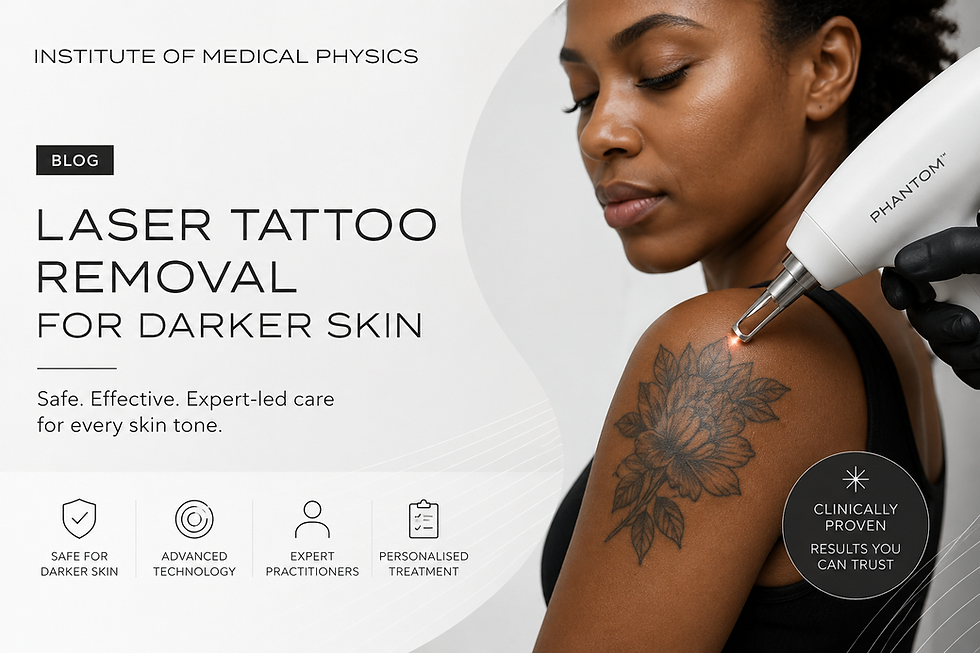
At the Institute of Medical Physics, offering laser tattoo removal in Kings Cross, the Phantom™ system uses advanced acoustic shockwave technology specifically designed to break down ink without relying on heat, making it a clinically considered option for patients with darker skin who haven't found suitable treatment elsewhere.
Removing tattoos on darker skin is doable, but the work has to be done correctly. It is necessary to have the right technology, ensure the settings suit the individual, and have a proper understanding of melanin-rich skin, rather than giving every client the same treatment.

Comments